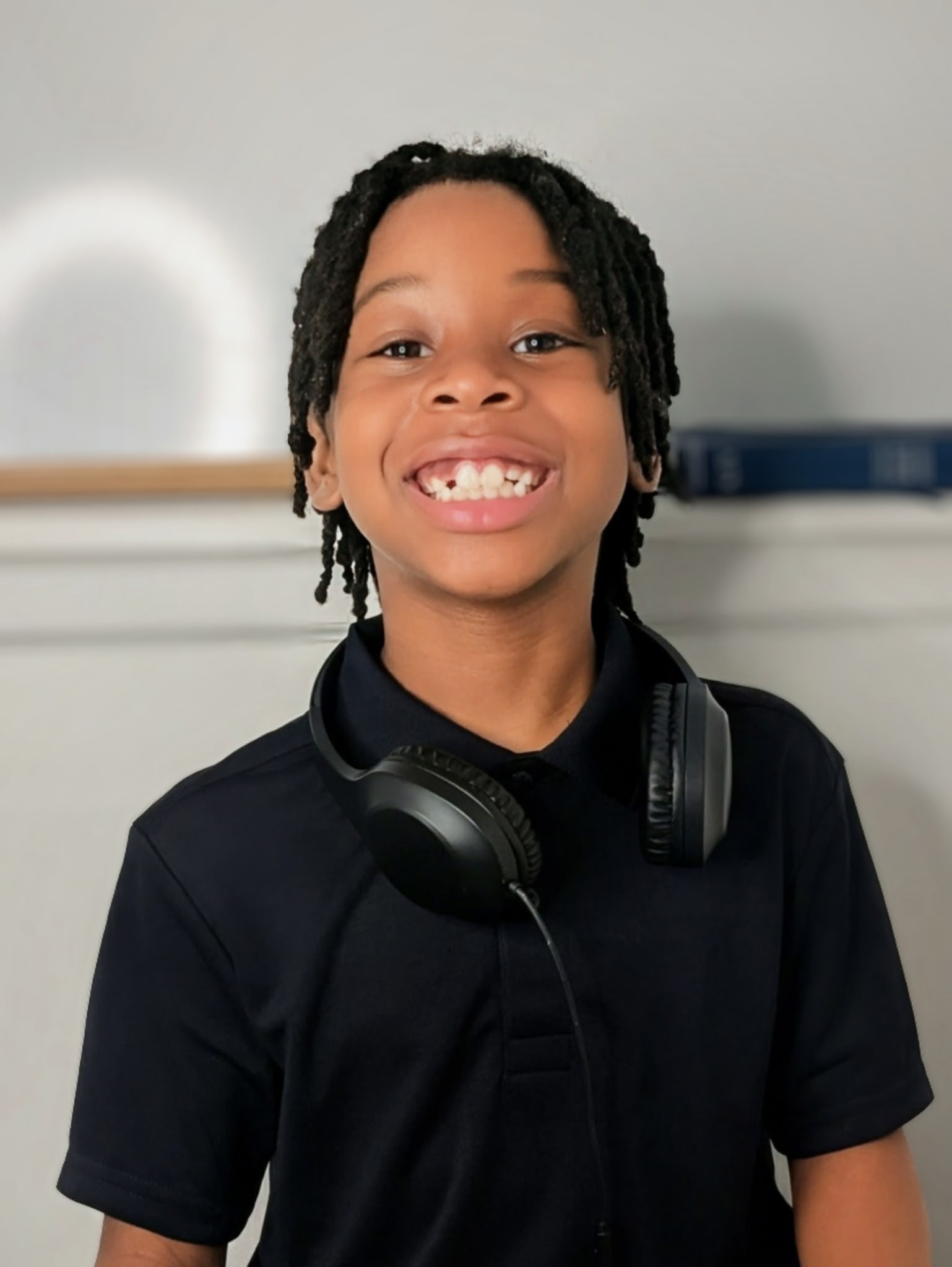
Early Strong Minds Student
Where the Strong Minds Model Began
Before Strong Minds became a formal six-week cohort, we used its core approach with Graceson: understand the starting point, create a focused plan, practice consistently, provide structured support, and measure progress.
The Problem Wasn’t Intelligence. It Was Visibility.
Graceson’s family knew he was capable. But like many families using digital learning, grades and completed assignments did not always answer the most important questions.
They wanted to understand:
- what he had actually mastered
- where he was ready for more challenge
- where gaps still existed
- and what he should work on next
A Clear Starting Point Changed the Conversation
Instead of asking only whether assignments were complete or grades looked good, the early Strong Minds approach used diagnostic information to create a clearer picture of where Graceson was academically.
That gave his family something more useful than a general impression. They could see areas of strength, areas needing development, and where additional challenge made sense.
What the Measurements Showed
While using the early Strong Minds approach, Graceson’s measured academic levels increased in both Math and Reading/Language Arts, with especially strong movement in reading and language skills.
Math Progress
- Base Ten / Number Operations: 380 → 410
- Operations & Algebraic Thinking: 350 → 420
- Measurement & Data: 350 → 440
- Geometry: 360 → 380
Reading / Language Arts Progress
- Reading Overall: 340 → 560
- Foundational Reading: 380 → 580
- Reading Literature: 320 → 590
- Informational Text: 310 → 510
- Writing: 320 → 600
- Language: 320 → 520
These are Graceson’s verified individual results from an early implementation of the Strong Minds approach, before the formal cohort pilot. They are shared as one student’s growth story and are not a guarantee of results for other students. Individual progress will vary.
“The goal isn’t just to see a higher score. It’s to know where a student is, what they understand, and what challenge should come next.”
When the Numbers Didn’t Tell the Whole Story
At one point, Graceson advanced quickly into work that appeared to be significantly above his expected level.
But when he was asked to explain how he reached some of his answers, the understanding behind those results was not always there.
That created an important lesson for Strong Minds:
Progress should be something a student can demonstrate — not simply a number on a screen.
Accountability Became Part of the Model
Instead of celebrating a higher level simply because the system displayed it, the focus returned to what Graceson could independently demonstrate.
From there, the priority became:
- working at an appropriate level
- allowing challenge instead of avoiding it
- showing understanding, not just completion
- and advancing when the learning was genuinely there
That emphasis on accountability now sits alongside diagnostics, focused practice, support, and progress tracking in the Strong Minds model.
What We Learned
Graceson’s experience helped shape Strong Minds.
Giving a student a clear starting point, focused goals, consistent practice, structured support, accountability, and a way to see progress became the foundation of the model.
We have since developed that approach into a structured six-week experience that also includes:
- an individualized Mission Brief
- weekly Growth Lab
- optional Study Hall
- near-peer mentorship
- weekly parent visibility
- and a beginning-to-end progress picture
Ready to Build a Stronger Mind?
Cohort 1 is intentionally small: just 3–4 boys working through six weeks of structure, challenge, accountability, and community.
Every student begins with his own starting point and follows an individual learning path while growing alongside the group.
Apply for Cohort 1Apply first • accepted families enroll for $45/week • six-week commitment